
How to Fix Poor Posture: Guide to Causes, Symptoms & Treatment | Battersea & Chelsea Chiropractic London
How to fix poor posture is one of the most common questions we hear from patients visiting our luxury clinic inside Battersea Power Station. Poor posture doesn’t just affect how you look it affects how you move, breathe, work, exercise, sleep and feel every single day.
Posture influences spinal health, nervous system function, muscle balance and long-term resilience. When posture deteriorates, pain and dysfunction often follow.
At Battersea & Chelsea Chiropractic, we help patients from Battersea, Chelsea, Nine Elms, Pimlico, Wandsworth, Clapham, Victoria, Kensington and across South West London correct posture safely, effectively and sustainably not through quick fixes, but through precise clinical care and long-term correction.
Why Fixing Poor Posture Matters More Than You Think
Posture is a reflection of how your spine and nervous system are functioning. When aligned well, movement feels effortless and pain free. When posture breaks down, the body compensates with tension, stiffness and inefficient movement patterns.
At Battersea & Chelsea Chiropractic Clinic, we specialise in fixing poor posture correction for patients from Battersea Power Station, Pimlico, Chelsea, Nine Elms, Clapham, Wandsworth, Victoria and across South West London. As a luxury, boutique chiropractic clinic, we take a holistic, detailed approach to fixing poor posture combining advanced spinal correction with soft-tissue therapy, dry needling, lifestyle coaching and personalised rehabilitation plans.
Our goal is not just to improve how you stand or sit but to restore how your entire body functions.
What Is Poor Posture & How Does It Affect the Body?
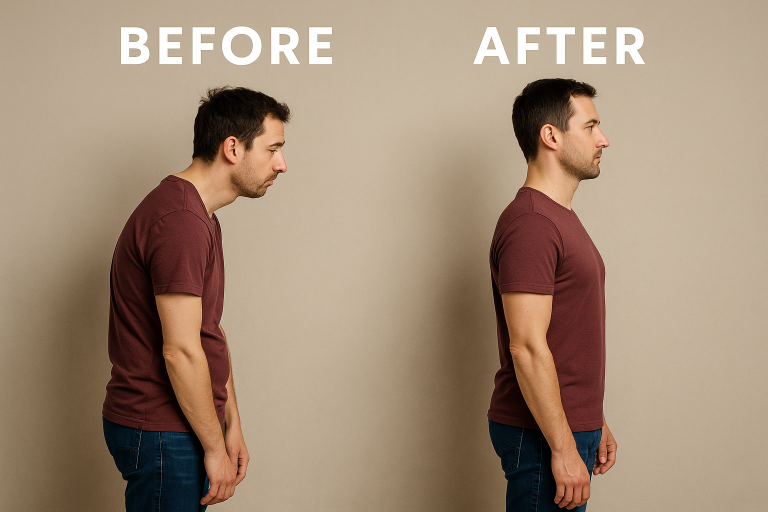
Poor posture occurs when the spine drifts away from its natural alignment and the body is forced to rely on inefficient muscle patterns to stay upright.
In healthy posture:
The head sits directly over the shoulders
The shoulders rest back and down
The spine maintains its natural curves
Muscles work efficiently rather than constantly “holding on”
Joints load evenly
When posture deteriorates, the head often moves forward, the shoulders round, the chest collapses and the lower back either flattens or over-arches. This places excessive strain on the neck, shoulders and lower back.
According to UK musculoskeletal guidance, prolonged poor posture is one of the most common drivers of chronic spinal pain in working-age adults, particularly in London professionals with desk-based lifestyles.
Poor Posture Can Cause:
- Poor posture rarely has a single cause. In our Battersea clinic, we see posture problems develop gradually through a combination of lifestyle habits, muscle imbalances and unresolved injuries.
Prolonged Sitting & Desk Work
- Long hours at desks especially on laptops are the most common cause of posture breakdown we see in patients living and working around Battersea Power Station, Chelsea, Nine Elms and Wandsworth.
- Sustained sitting encourages a slumped lower back, rounded shoulders and a forward head position. Over time, core muscles weaken, hip flexors tighten and the upper back stiffens, making upright posture feel unnatural.
Phone & Screen Use (“Tech Neck”)
- Repeatedly looking down at phones and tablets dramatically increases strain on the neck. The further the head moves forward, the greater the load placed on cervical joints and muscles. This often leads to neck pain, headaches and shoulder tightness.
Stress & Emotional Load
- Stress plays a significant role in posture. Chronic stress increases muscle tension, restricts breathing and pulls the shoulders forward. Emotional posture and physical posture are deeply connected and must be addressed together.
Muscle Weakness & Imbalance
- Posture depends on the coordination of deep stabilising muscles. Weakness in the deep neck flexors, mid-back muscles, core and glutes causes the body to collapse forward, particularly during long workdays.
Previous Injuries

- Old injuries including whiplash, shoulder injuries, ankle sprains and disc problems often leave behind compensation patterns. The body adapts to avoid pain, but these adaptations frequently worsen posture over time.
Whiplash, shoulder injury, gym strain, ankle sprains, disc injuries and falls can all cause long-term posture adaptation.
When the body avoids pain, it creates a new pattern — often dysfunctional.
Early Signs & Key Symptoms of Poor Posture
Many people live with posture-related symptoms for years without realising the cause. Common early signs include neck stiffness, shoulder fatigue, frequent headaches, lower back aching after sitting, uneven shoulders, arm tingling and difficulty standing tall comfortably.
When these symptoms persist, professional posture correction is strongly recommended to prevent long-term structural changes.
How to Fix Poor Posture – The Professional Approach
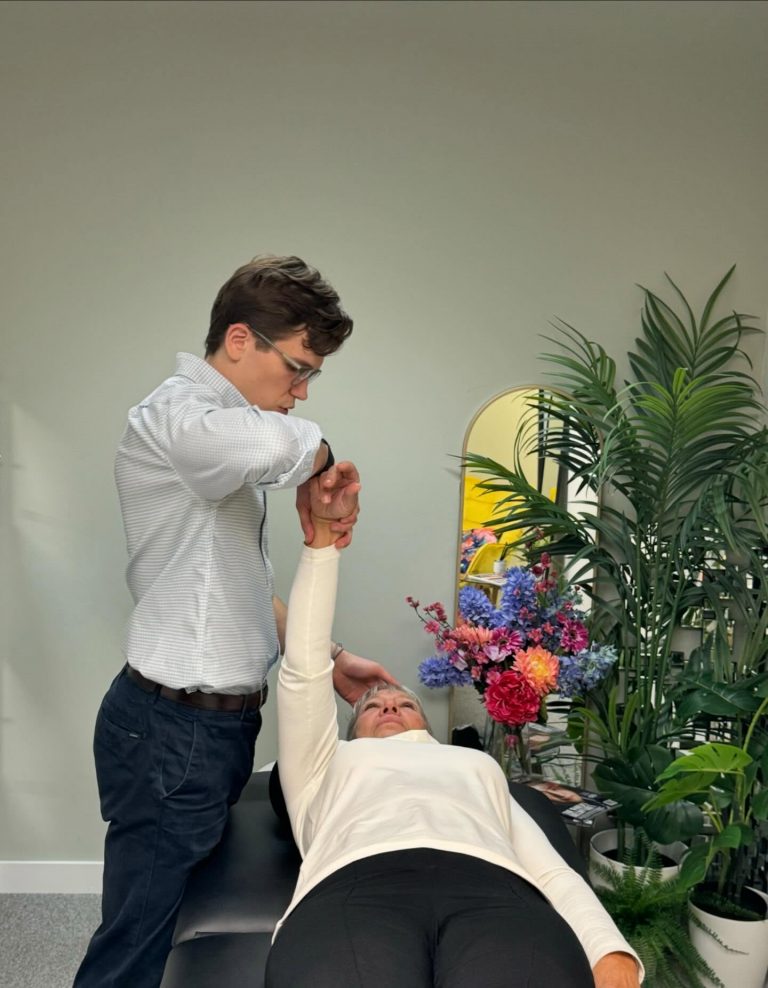
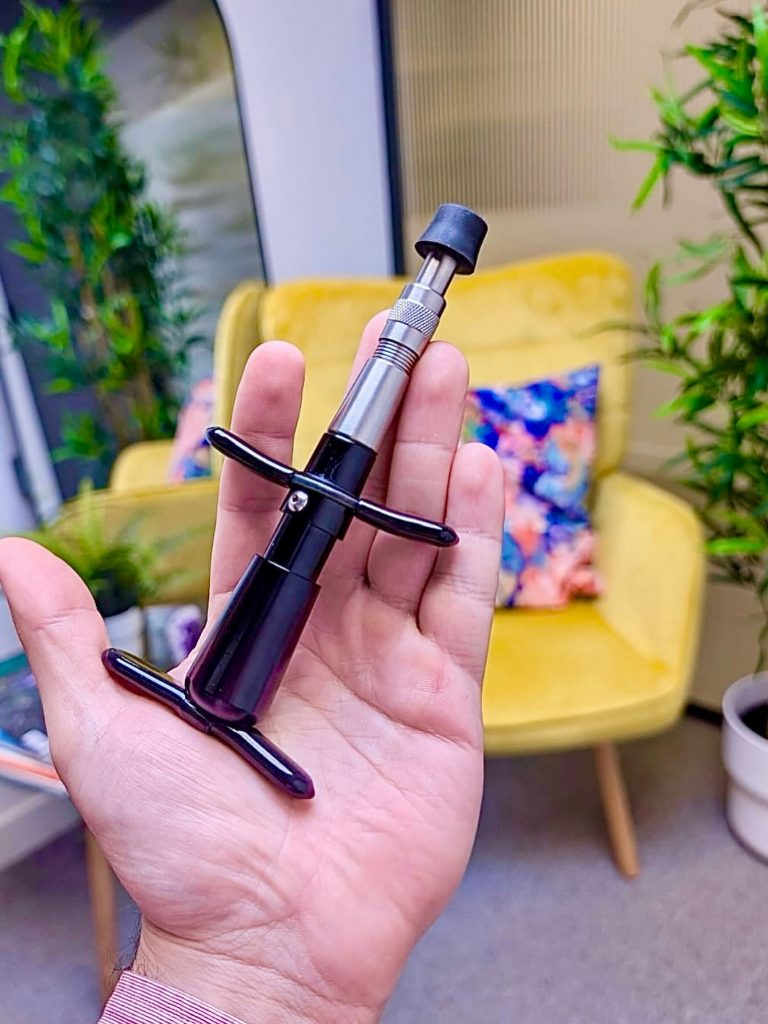
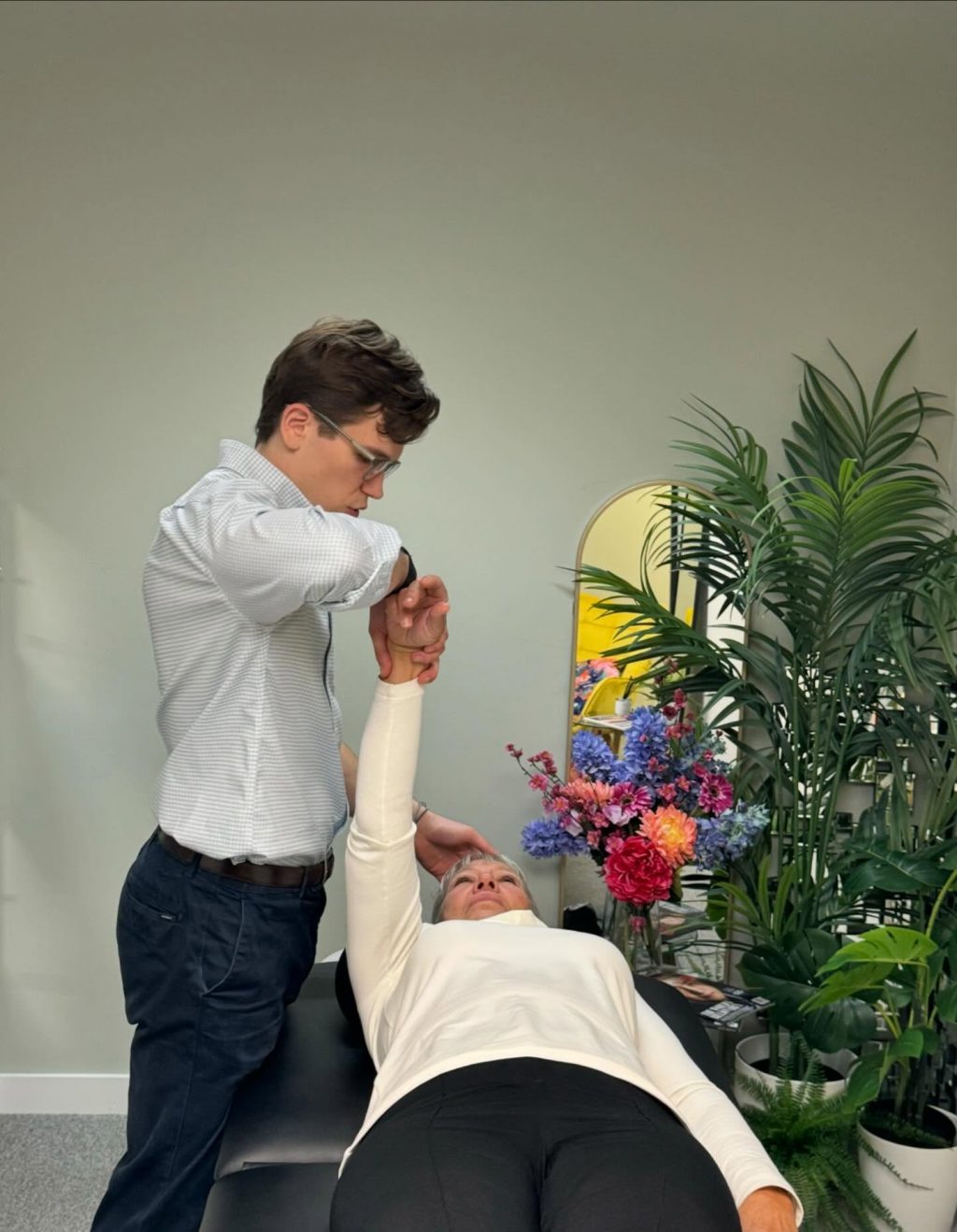
Fixing posture requires far more than reminders to “sit up straight”. At Battersea & Chelsea Chiropractic, posture correction follows a structured, clinical process. Posture cannot improve if spinal joints are restricted. Chiropractic adjustments restore natural movement, reduce joint stiffness, decompress irritated nerves and improve neuromuscular control. Alignment is the foundation of posture.
Correct posture relies on balanced muscle strength. Treatment focuses on restoring function to postural support muscles so the body can hold alignment naturally without strain. Tight chest muscles, hip flexors and upper back tension physically pull the body forward. Targeted soft-tissue work allows the spine to return toward neutral alignment.
Posture is influenced by how you work, move and live. Our clinic regularly supports patients from Clapham, Victoria, Kensington and Wandsworth with ergonomic adjustments that dramatically reduce daily strain. Chiropractic posture correction improves joint alignment, reduces tension, recalibrates the nervous system and prevents recurrence — not just short-term relief.
Why Does Sitting Hurt My Back?
Sitting feels harmless. Most people do it for hours every day without giving it much thought. Yet sitting is one of the most common reasons people develop persistent lower back pain, stiffness and postural issues, especially in busy urban environments like London.
When you sit, your body is not in a neutral or natural position. The spine is designed for movement, not prolonged stillness. As soon as you sit down, pressure through the spinal discs increases. Over time, this creates strain through the lumbar spine and surrounding muscles.
Another issue with sitting is reduced circulation. Remaining still for long periods limits blood flow to spinal tissues and muscles. This slows recovery, increases stiffness and makes the back feel heavy or tight when you stand up. Many people notice that the longer they sit, the harder it becomes to move freely afterwards.
Sitting also affects breathing. Slouched posture compresses the chest and diaphragm, encouraging shallow breathing. This increases tension in the neck and shoulders and reduces the body’s ability to relax, which further contributes to discomfort.
The solution is not to avoid sitting altogether, but to support the spine properly, restore movement and reduce the strain sitting places on your back. When spinal alignment and mobility are improved, sitting becomes far more comfortable and less damaging, even during long workdays.
If sitting regularly leaves your back sore, stiff or fatigued, it is a clear sign that your posture and spinal mechanics need attention rather than something you should simply push through.
Types of Postural Problems
Postural problems rarely look the same from one person to another. While the underlying issue is often reduced spinal balance or muscle coordination, the way posture presents can vary significantly depending on lifestyle, work habits, previous injuries and daily movement patterns. Understanding the most common types of postural problems helps explain why posture related pain shows up differently in different people.
One of the most common patterns is a rounded upper body posture, where the shoulders roll forward and the head drifts ahead of the body. This often develops in people who spend long hours working at desks or using laptops and phones. Over time, the muscles of the chest tighten, the upper back stiffens and the neck is forced to support the weight of the head in a strained position. This pattern is frequently linked to neck pain, shoulder tension and headaches.
Another common postural issue affects the lower body and pelvis. In this pattern, the pelvis tilts out of its natural position, placing extra pressure through the lower back. Some people experience this as a deep arch in the lower spine, while others notice flattening and stiffness. This imbalance often contributes to lower back pain, hip tightness and discomfort when sitting or standing for long periods.
Forward head posture is another widespread problem, particularly in people who work on screens throughout the day. Even a small forward shift of the head places significant strain on the neck and upper back muscles. Over time, this can lead to persistent stiffness, reduced mobility and fatigue.
Some people also develop a rounded upper back, where the spine gradually curves forward. This often progresses slowly and can go unnoticed until posture feels difficult to correct or movement becomes restricted.
Postural problems rarely exist in isolation. Many people experience a combination of these patterns, which is why professional assessment is important. Identifying the specific type of postural imbalance allows correction to be targeted, effective and sustainable rather than generic or temporary.
Best Exercises to Fix Poor Posture
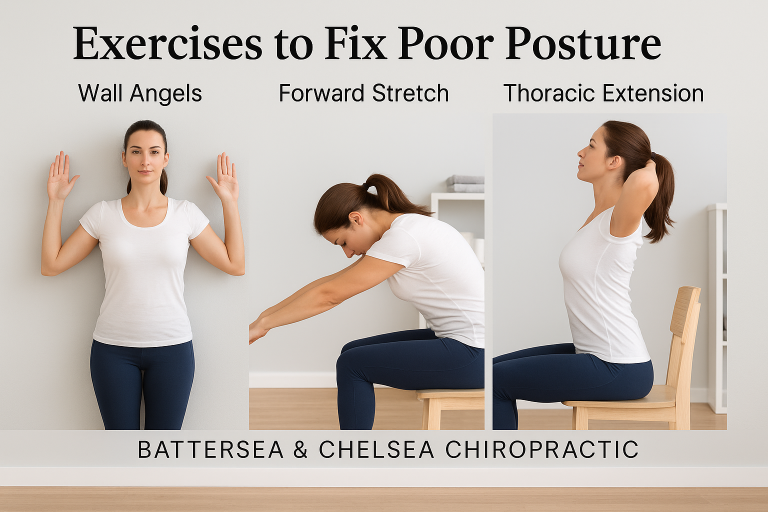
The most effective exercises for fixing poor posture focus on restoring balance, strength and mobility rather than forcing the body into an upright position. Posture improves when the muscles that support the spine are strong enough to maintain alignment comfortably and the joints can move freely without restriction.
Strengthening the deep neck muscles helps reduce forward head posture and eases tension through the neck and shoulders. Activating the mid back muscles encourages the shoulders to sit back naturally, reducing upper back fatigue. Core and glute strengthening also plays a key role by supporting the pelvis and lower spine, particularly during long periods of sitting.
Mobility exercises are equally important. Improving movement through the upper back counteracts stiffness caused by desk work, while stretching tight areas such as the chest and hip flexors helps release the forward pull that contributes to slouching. When these exercises are performed consistently, posture improves naturally without constant effort or strain.
When Should You Seek Professional Help?
You should seek professional help when posture related discomfort is no longer occasional and begins to affect your daily life. Persistent neck or back pain, regular headaches, shoulder tightness, stiffness after sitting, or nerve symptoms such as tingling or numbness are all signs that posture may be placing ongoing strain on the body. Difficulty standing tall comfortably or noticing a visible change in posture are also important indicators.
If pain is interfering with work, sleep, exercise or concentration, it is best not to ignore it. Early assessment allows posture issues to be addressed before they become long term or harder to correct, making recovery smoother and more effective.
How to Fix Poor Posture FAQ
Can poor posture cause headaches?
Yes, poor posture strains the neck, leading to tension headaches and migraines.
How long does posture correction take?
4–6 weeks for mild cases, 8–12 for moderate, and longer for structural changes.
Is bad posture permanent?
No — posture is highly correctable.
Can poor posture cause nerve pain?
Yes, posture can irritate cervical and lumbar nerve roots.
Can a chiropractor fix poor posture?
Yes — through adjustments, muscle release and rehab.
Book Your Posture Consultation
Was £120 — Now £60 (Limited availability)
Includes:
Spinal alignment analysis
Neurological & orthopaedic testing
Tailored corrective plan
📍 Inside Battersea Power Station
📞 0204 577 1017
💬 WhatsApp: 07349 791628
🌐 Website