Back Pain When Sitting: Causes, Patterns & When to Get Checked in Battersea
Introduction
If you experience back pain that creeps in while sitting, worsens during the workday, or flares up after commuting, you’re not alone. At Battersea & Chelsea Chiropractic, this is one of the most common concerns we hear from professionals, residents, and remote workers across Battersea, Chelsea, Nine Elms, Pimlico, and Westminster.
For many people, the discomfort isn’t dramatic at first. It may feel like stiffness when standing up, a dull ache across the lower back, or a sense that the spine just doesn’t “switch off” once the day is over. Over time, sitting-related back pain can begin to affect sleep, concentration, and daily movement — even though nothing specific feels “injured”.
This article explains why back pain often shows up during sitting, what patterns we commonly see in clinic, when it’s worth getting checked, and how people in London typically regain comfort and confidence with the right approach.
What does it mean if your back hurts when sitting?
Back pain when sitting usually reflects how the spine is loading over time, rather than a single injury. Sitting places sustained pressure through the lower spine, pelvis, and surrounding muscles. When certain joints aren’t moving well, or when posture becomes habitual rather than adaptive, the nervous system often responds with discomfort as a warning signal.
For some people, the pain builds gradually during the day. For others, it appears suddenly after prolonged desk work or commuting. Importantly, sitting-related back pain is often mechanical and functional, not dangerous — but it shouldn’t be ignored if it’s persistent.
Why does sitting trigger back pain?
Sitting changes how the spine carries load. Compared to standing or walking, it reduces natural movement through the hips and lower back while increasing static pressure on specific joints and discs.
Common contributors include:
Reduced spinal movement
Prolonged muscle tension
Altered pelvic position
Reduced circulation to spinal tissues
Over time, these factors can sensitise the nervous system, making even normal sitting positions feel uncomfortable.
Is back pain when sitting something to worry about?
In most cases, back pain that appears while sitting is not a sign of serious pathology. It often reflects how the spine is being loaded over time rather than injury.
That said, discomfort can become more persistent if underlying movement patterns aren’t addressed. Pain that lingers for several weeks, worsens instead of settling, or consistently returns when standing up is worth paying attention to.
Reduced tolerance to sitting, stiffness after getting up, or pain that begins to interfere with sleep or daily activities are all signs that an assessment may be helpful. Early clarity often prevents a short-term issue from becoming a longer-term pattern.
When should you consider getting it checked?
You should consider an assessment if sitting-related back pain:
Keeps returning despite posture changes
Appears alongside reduced mobility
Is affecting work or concentration
Feels different from simple muscular fatigue
Many people delay care because the pain feels “manageable”. In practice, we often see that earlier clarity leads to faster resolution.
Why back pain from sitting often develops (deeper explanation)
The spine relies on regular movement to distribute load evenly. When sitting, particularly for long periods, certain spinal joints move very little while others take disproportionate strain. Over time, this imbalance can irritate local tissues and sensitise nearby nerves.
Pelvic position and muscular tension
Sitting often alters pelvic alignment. This can increase tension through the lower back muscles while reducing support from deeper stabilising structures. The result is often a dull ache rather than sharp pain.
Nervous system sensitivity
Pain is not purely mechanical. Repeated low-level stress can heighten the nervous system’s sensitivity, meaning discomfort appears sooner and lasts longer — even without structural damage.
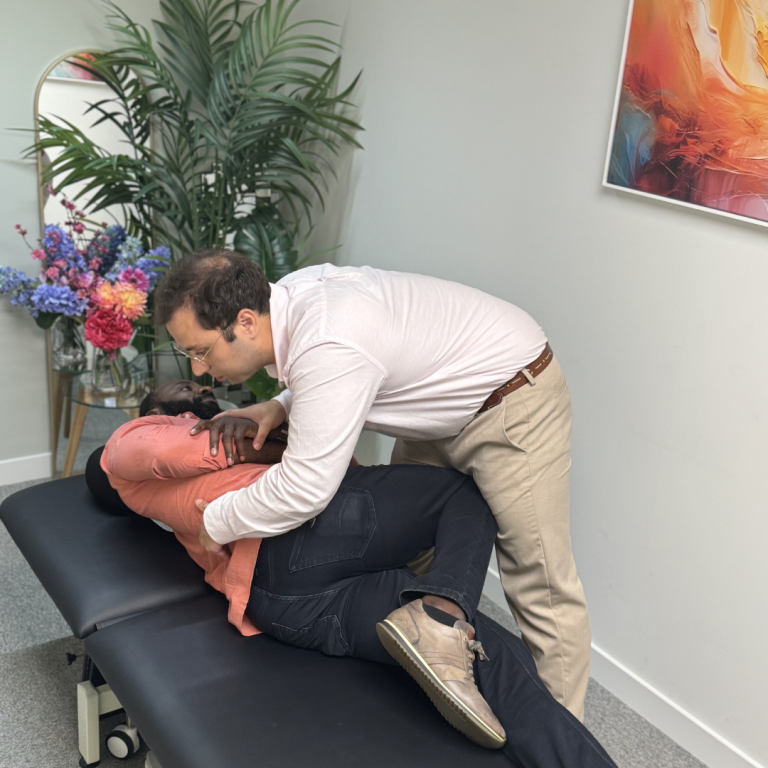
Patterns we commonly see in our Battersea clinic
In our Battersea and Chelsea clinic, we regularly see sitting-related back pain among people who live or work across Battersea, Chelsea, Pimlico, Wandsworth, Nine Elms, and the wider London area. This includes desk-based professionals, people working from home without proper ergonomic support, and commuters who spend long periods seated on trains, buses, or in traffic each day.
A growing group we also see are individuals transitioning back into office-based work after extended periods of remote working. In many cases, the spine has adapted to reduced daily movement, and sitting for sustained periods becomes increasingly uncomfortable.
A common pattern is back pain that eases with standing or walking, worsens during prolonged sitting, and returns predictably during workdays or long commutes. When these patterns are left unaddressed, they often become more frequent, more sensitive, and require longer recovery time — which is why many people begin looking for a local London chiropractor to help understand what’s driving the issue rather than simply managing the symptoms.
Local lifestyle factors that matter
Living and working in Battersea, Chelsea, and Nine Elms often means long daily commutes, extended desk-based work, and frequent laptop or mobile use, particularly for professionals working across central and southwest London. Many people spend large parts of the day seated — whether at a desk, on public transport, or working remotely — with limited opportunity for regular movement.
On their own, these habits don’t automatically cause back pain. However, over time they can amplify existing movement imbalances within the spine, especially when combined with high workloads, ongoing stress, and reduced recovery time. This is why many people begin searching for a chiropractor near me when sitting-related back pain becomes persistent rather than occasional — not because something is “wrong”, but because the body is struggling to adapt to sustained daily demands.
How back pain from sitting is typically assessed
Assessment begins with understanding your individual pattern of pain — when it appears, how it behaves throughout the day, and what seems to improve or aggravate it. For many people in Battersea, Chelsea, Nine Elms, and surrounding areas of London, this helps clarify whether sitting, commuting, or work routines are playing a role.
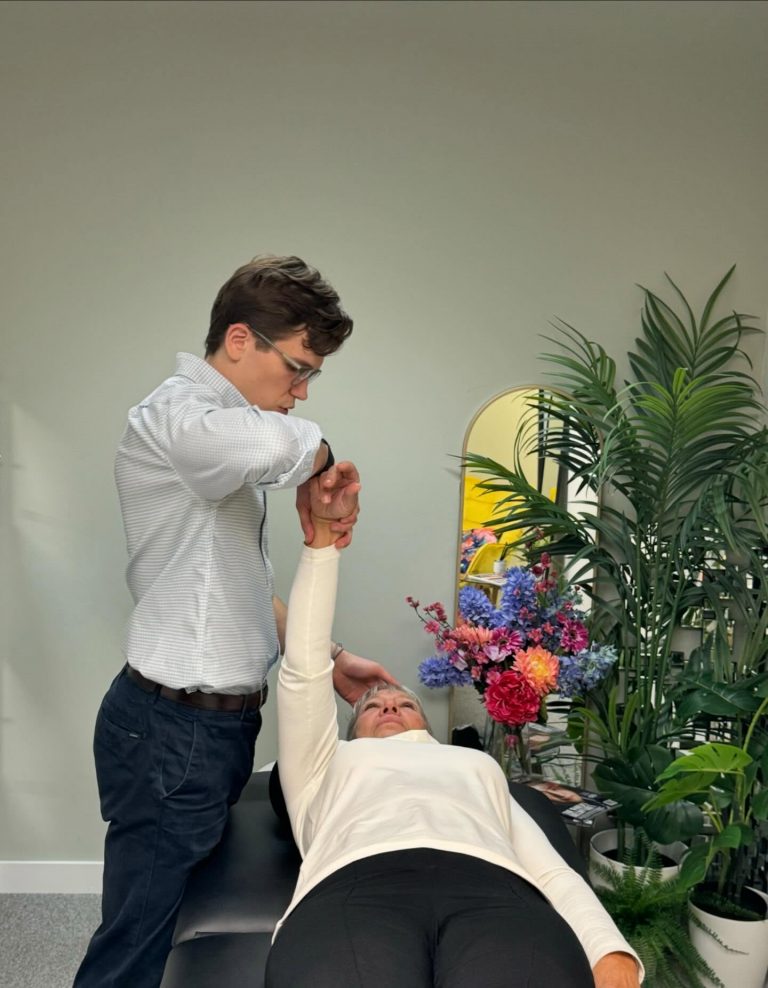
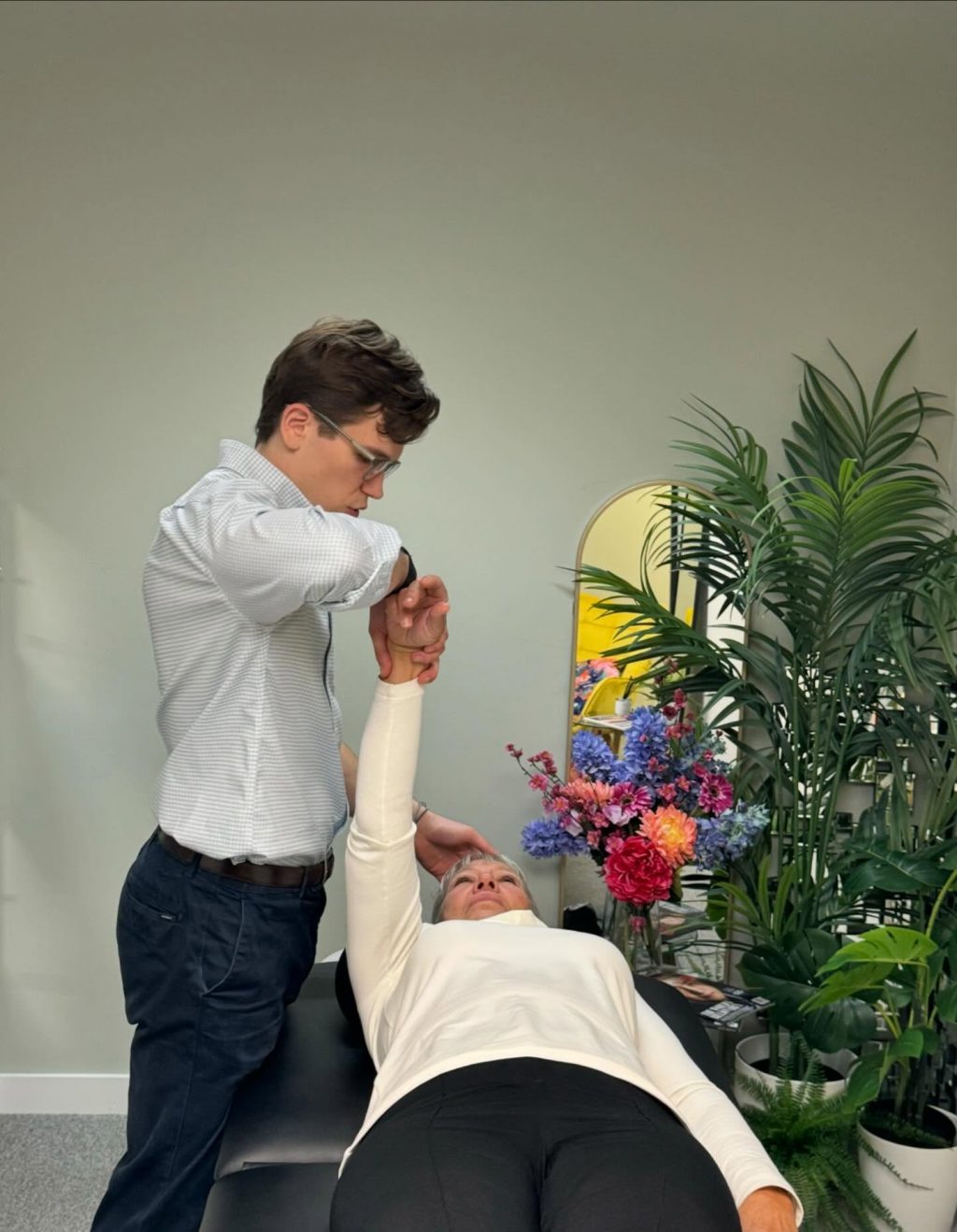
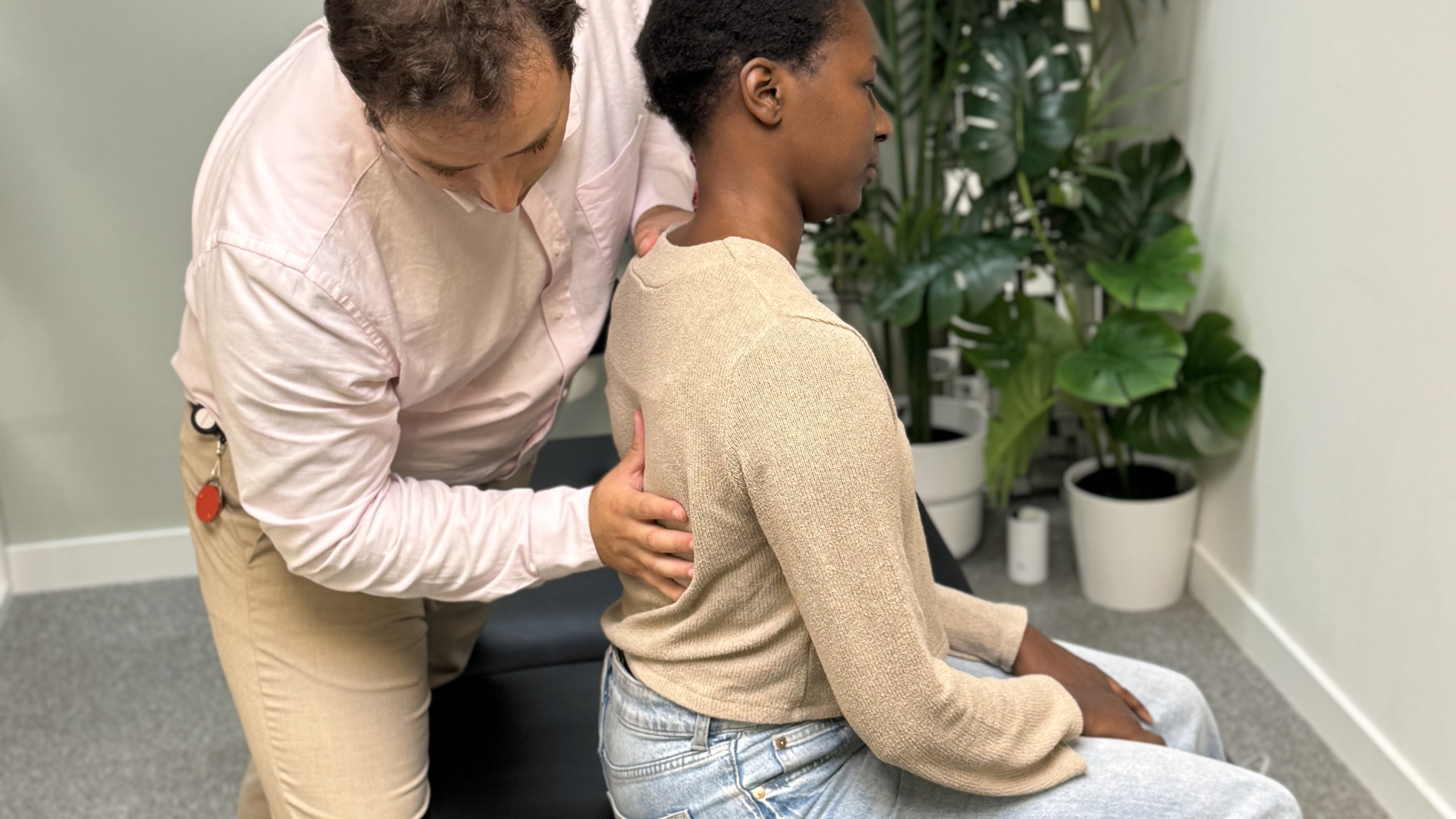
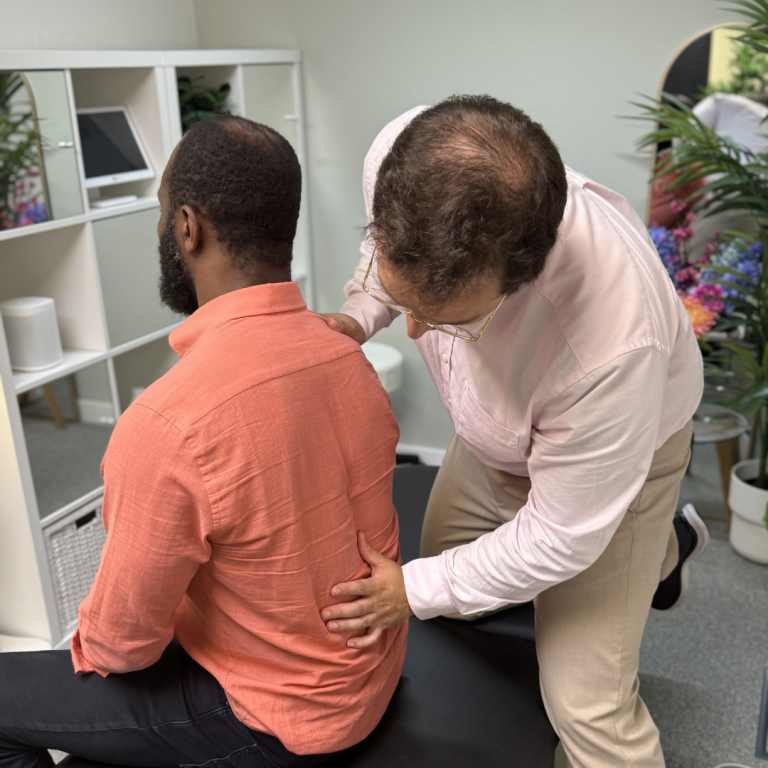
From there, we assess how the spine, pelvis, and hips are actually moving. This goes beyond posture alone and looks at joint function, coordination, and how different areas of the body are working together. Restrictions or imbalances here often explain why pain keeps returning despite rest or stretching.
We also consider contributing factors such as desk setup, daily sitting habits, activity levels, previous injuries, and recovery time. These details are especially relevant for people searching for a chiropractor near me after noticing that back pain is becoming a regular part of working life in London.
Any care plan is then guided by what we find during assessment — not assumptions or generic protocols. The focus is on restoring movement, reducing sensitivity, and improving tolerance over time in a way that fits your routine.
You can learn more about our broader approach on our back pain care and assessment in Battersea page.
Common ways sitting-related back pain shows up
Sitting-related back pain rarely presents in exactly the same way for everyone. In practice, it tends to follow a handful of recurring patterns that reflect how the spine is being loaded throughout the day.
For some people, discomfort builds gradually as the day progresses. The back may feel relatively settled in the morning, only to become increasingly tight or achy after several hours at a desk. This pattern often points to cumulative strain rather than a single trigger, particularly when movement is limited for long periods.
Others notice that pain appears predominantly on one side of the lower back while sitting. This can feel confusing, especially when posture appears symmetrical. In many cases, this reflects subtle differences in joint movement or habitual weight-shifting rather than anything structurally “wrong”. Over time, the body adapts to these patterns, and sensitivity can increase.
A common theme we see is pain that eases almost immediately when standing or walking. This usually indicates that the spine is responding positively to movement, and that prolonged static positions are the main challenge. While this can feel reassuring, it’s also a sign that the underlying issue hasn’t fully resolved.
Long commutes are another frequent factor. Sitting for extended periods in cars or public transport places sustained load through the lower spine, often without the opportunity to adjust position. People often report arriving at work already feeling stiff, which then worsens as the day goes on.
In some cases, sitting-related back pain becomes highly predictable — appearing during every workday, then settling slightly over the weekend or on days away from the desk. This cyclical pattern suggests a mechanical issue that’s being repeatedly aggravated rather than a one-off strain.
Finally, many people describe stiffness or discomfort when standing up after sitting, particularly after meetings, meals, or travel. This sensation can feel alarming, but it’s often linked to reduced joint movement and temporary muscular guarding rather than injury.
Understanding which of these patterns fits your experience is often the first step toward addressing the problem more effectively.
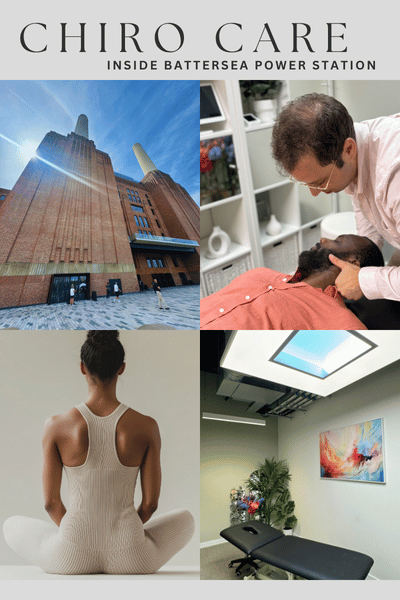


Our approach to sitting-related back pain
Our approach is centred on understanding why your back is reacting the way it is, rather than simply responding to pain itself. Sitting-related discomfort is rarely solved by posture correction alone or by short-term fixes.
Instead, assessment focuses on how the spine, pelvis, and surrounding structures are moving — and how those movement patterns interact with daily routines such as work, commuting, and recovery time. The goal is to restore confidence in movement and reduce sensitivity gradually, rather than forcing change.
Care is guided by what we find during assessment, and progress is reviewed as symptoms change. For most people, the earliest improvements are subtle: increased ease when standing up, less stiffness at the end of the day, or improved tolerance to sitting without discomfort escalating.
How to know whether it’s worth getting checked
If back pain when sitting has become something you regularly expect rather than notice occasionally, it’s often a sign that an underlying issue needs attention. Persistent discomfort, predictable flare-ups during desk work, or a feeling that your back never fully settles after sitting are common reasons people seek a chiropractor in London. We frequently hear this from professionals living or working in Battersea, Chelsea, Nine Elms, Pimlico, and Wandsworth, where long hours of sitting and commuting are part of daily life.
An assessment isn’t about committing to ongoing treatment or assuming something serious is wrong. It’s about identifying whether the problem is mechanical, how sitting habits and movement patterns may be contributing, and what options are available to improve comfort and function safely. This is often when people begin searching for a chiropractor near me — not because of urgency, but to get clear, local guidance from an experienced London chiropractor who understands the demands of modern working life.
Final thoughts
Sitting is a normal part of modern life, but persistent back pain doesn’t have to be. When discomfort becomes routine rather than occasional, it’s often the body’s way of asking for change — not necessarily rest, but better movement and understanding.
If you live or work in Battersea, Chelsea, or nearby areas and want a clearer picture of what’s contributing to your symptoms, a calm, thorough assessment can help you decide what makes sense next, without pressure or obligation.
Want clarity on your back pain?
If sitting-related back pain keeps returning, a proper assessment can help you understand what’s going on and whether care is appropriate.
Email: info@batterseaandchelseachiropractic.co.uk
Phone: 0204 577 1017
WhatsApp: 07349 791628
No pressure. Just clear answers.